The Hidden Cost of OTA Dependency: Direct Booking Economics
The Online Travel Agency (OTA) tax isn’t just commission. It’s the loss of revenue design and customer compounding.
Most CFOs in the APAC travel sector can calculate the 15–20% commission paid to OTAs. Few can see what erodes before revenue ever compounds.
The real OTA tax isn’t what you pay intermediaries. It’s what you cannot build without owning the customer relationship: the ability to design revenue beyond the base rate, and the compounding returns of customers who return because you understand them better each time.
The True Margin Impact
True Margin Impact = Commission + Lost Ancillaries + Lost LTV
In a market where margins are tightly managed, structural leakage matters more than visible commission.
Two leaders, Vivek Singh, VP Revenue & Growth Global at RedDoorz, and Bavani Veeriah, Head of Marketing at Batik Air, reveal where margin disappears first, what early warning signals matter, and how to rebalance toward direct without destabilizing partnerships.
Invisible Margin Leak #1: The Ancillary Cliff
When RedDoorz sees OTA booking mix increase, Vivek isn’t just watching commission. He’s watching a revenue stream with a 90% attach rate begin to erode.
“For room-only revenue, 15–20% commission hurts,” he explains. “But the flexibility to upsell and cross-sell ancillaries disappears if the booking mix shifts toward OTA.”
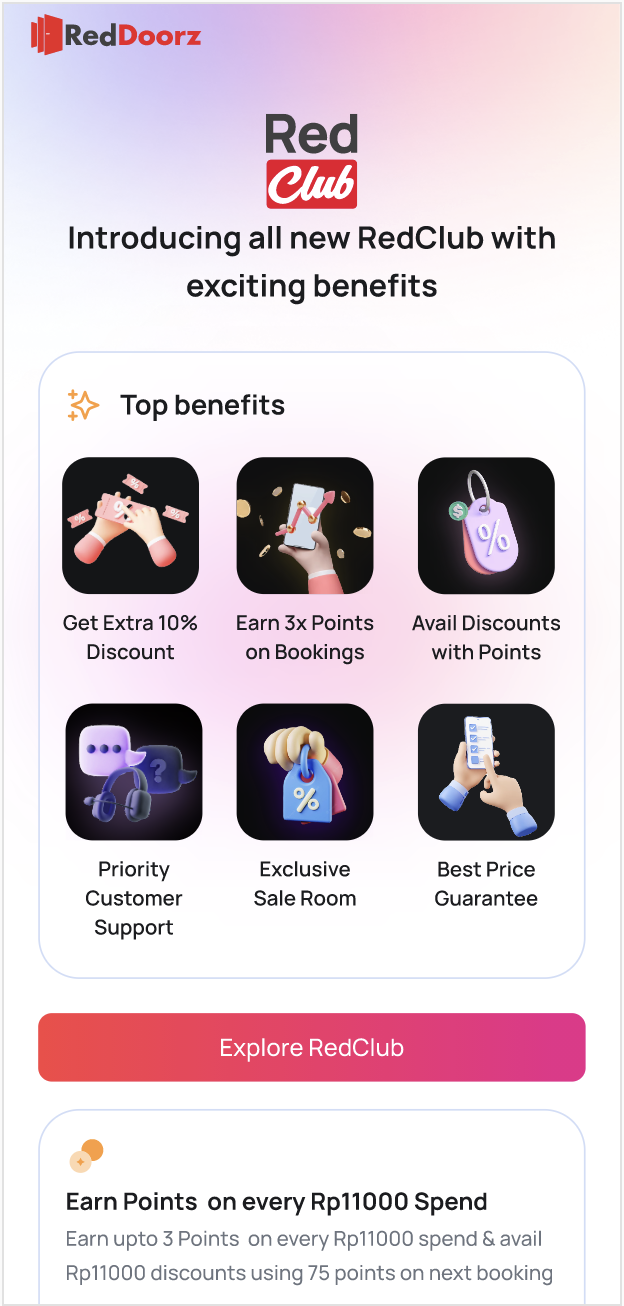
At RedDoorz, loyalty plan RedClub attaches to over 90% of direct bookings. It is not a marketing perk, it’s a structural margin driver.

OTAs are not incentivised to sell proprietary ecosystem value. Breakfast may surface as an add-on. Generic upgrades appear. But customised bundles, loyalty multipliers, and platform-level value rarely translate through intermediary interfaces.
The Digital Travel Benchmark Report highlights the cost of fragmented technology adoption:
- 69% of travel brands still rely on CRM, while only 66% use predictive analytics.
- 63% apply AI post-trip, and 59% pre-trip, indicating fragmented adoption of key technologies that could enhance customer experience and margin optimization.
This lack of data cohesion directly impacts ancillary sales and customer loyalty. As AI and predictive tools are underutilized, brands miss critical opportunities to improve customer personalization and retention.
The biggest barrier to full data activation is guest trust, with 36% citing data privacy as a top barrier. Without trust, even the most sophisticated data-driven tools won’t work effectively.
This is the Ancillary Cliff:
Channel | Revenue Characteristics |
Direct | High ancillary attach rate, loyalty enrollment, personalised upsells, bundled value |
OTA | Limited add-ons (e.g., breakfast), generic upsells, no brand ecosystem integration |
Revenue may appear stable. Occupancy may even rise. But contribution per booking compresses quietly.
The deeper damage lies in data and in lost network effects.
When brands own first-party data, each direct booking strengthens the system. As more guests book directly, behavioural intelligence improves: preferred room types, amenity usage, recurring requests. That intelligence benefits all future stays.
Without direct data capture, brands lose access to network effects, the phenomenon where each direct booking improves the experience for every subsequent customer.
RedDoorz tracks granular signals during stays down to whether a guest consistently requests extra water bottles. On repeat direct bookings, those preferences are pre-loaded.
“On OTAs, the next stay starts from zero,” Vivek notes. Without first-party data, every subsequent stay effectively starts from scratch.
But his team does not concede the relationship when bookings originate through OTAs.
RedDoorz deploys tech-enabled touchpoints during the stay itself - QR codes for service requests, in-room tablets for amenities, app prompts at check-in, and post-stay surveys that capture direct contact permissions.
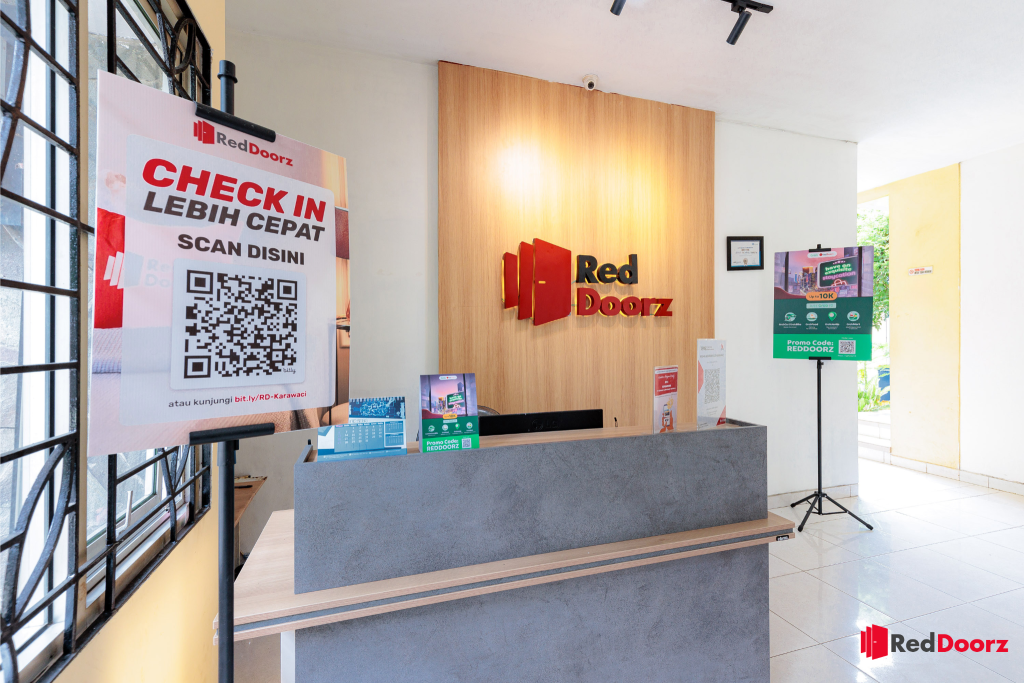
“We prioritise owning the relationship. Even for users booking through OTA, we create touchpoints during their stay.”
If acquisition is outsourced, relationship recovery shifts to the stay experience.
Invisible Margin Leak #2: Journey Fragility

If Vivek highlights erosion of revenue design, Bavani highlights erosion of completion certainty.
A customer starts on Batik Air’s website. Checks fares. Selects a flight then opens another tab.
“At that point, OTAs become attractive because they appear to offer a faster way to compare and complete,” she says. “Customers move to whichever channel makes completion easier in that moment.”
This is not primarily a pricing issue. It is a friction issue.
Slow load times. Checkout complexity. Unclear inclusions. Payment authorization failures even when external are perceived as brand failures.
OTAs have optimised what can be defined as: Completion Certainty
Saved payment credentials, structured comparison tabs, and simplified flows reduce cognitive load.
When friction appears in direct channels, intermediaries win even when fares are identical.
The airline loses twice:
- Commission on a customer it originally acquired.
- Service cost from preventable confusion.
Bavani notes that passengers occasionally arrive believing baggage was included because the OTA interface did not clearly display inclusions and blame the airline when it was not. The cost of resolving these failures falls entirely on the brand.
“The airline website is not just a sales channel anymore,” she emphasises."
It is a core part of the product experience.” To address this, Batik Air synchronises messaging across app push, email, and browser notifications. If a customer abandons on mobile, the recovery sequence follows them across devices maintaining consistency and reducing leakage.
Abandonment recovery must trigger quickly ideally within 15 minutes of drop-off, before comparison fatigue sets in.
Completion reliability is margin protection.
The Early Warning Signal: Channel Mix Creep
When does OTA volume shift from acceleration to dependency?
Vivek tracks Channel Mix Share = Channel Bookings / Total Bookings
Early-stage brands may strategically rely on OTAs.
“If the focus is to host as many customers as possible to sensitise more users about your brand, OTAs are a great source,” he explains. “Early on, direct channels may be too expensive for acquiring users.”
But this shift must be intentional and staged, not reactive.
Vivek is clear on this: “The north-star metric is Profit% or Profit per Room Night. Overall revenue might increase due to OTA-driven growth. But if profit per RN is decreasing either because of commission or reduced ancillary sales, it’s time to correct and reclaim share.”
He doesn’t look at SOV in isolation. He watches the interaction between profit, occupancy, and OTA share.
“If profit goes down while occupancy stays flat or even increases, that means we’re making less per occupied room night.”
This is the directional trigger. Volume rising without contribution lift signals dependency forming.
Once occupancy stabilises, leaders must monitor deterioration indicators:
- Declining ancillary attach rates
- Weakening repeat behaviour
- Reduced first-party data capture
- LTV/CAC compression
The Critical Ratio
LTV/CAC = Customer Lifetime Value / Customer Acquisition Cost
If marketing drives demand that ultimately converts through OTA, CAC effectively doubles — once in marketing spend, once in commission — while LTV remains capped.
Growth can mask structural dependency.
The Profit Driver Tree Discipline
Vivek describes RedDoorz’s approach as breaking down the full profit driver tree.
Instead of tracking blended performance, decompose revenue into:
- Acquisition (by channel)
- Conversion (by touchpoint)
- Ancillary Attach (by product)
- Retention (by cohort)
- Churn (by trigger)
Plan and optimise each branch independently. Then model how they interact.
Without this discipline, OTA growth can appear healthy while underlying economics deteriorate.
The 6-Month Direct Rebalance Playbook
Rebalancing does not mean eliminating intermediaries. It means restoring economic control.
Pillar 1: Fix Completion Certainty
Reduce friction. Strengthen payment resilience. Trigger abandonment recovery within 15 minutes. Synchronise messaging across channels.
“Customers are not actively choosing OTAs first,” Bavani says. “They choose whichever path completes most easily.”
Pillar 2: Build Non-Replicable Value
Direct channels must differentiate without violating rate parity.
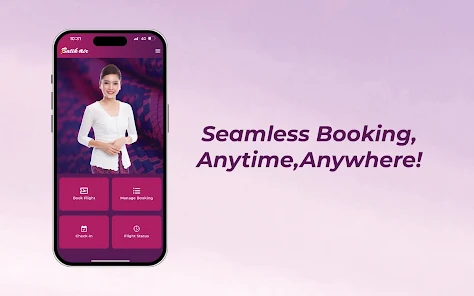
Batik Air offers web-exclusive bundles, loyalty multipliers, and flexible change policies. The base fare remains identical, preserving rate parity agreements while inclusions and flexibility differ.
This is the legal and strategic path to direct preference.
As Batik Air’s CEO frames it: “We are one of the airlines whose call to action is book online or via our preferred travel agents.”
The emphasis on “preferred” signals curation. Not all intermediaries are equal. Partnerships remain strategic but the economic core remains direct.
Pillar 3: Instrument Customer Economics
Tracking acquisition alone is insufficient. Customer economics ultimately depend on repeat behavior, contribution margin, and acquisition efficiency.
Direct-sourced customers typically show stronger repeat patterns and richer data leverage. OTA-sourced customers often reset the lifecycle at each stay.
LTV/CAC should be evaluated by channel, with a benchmark ratio of 3:1 or higher.
Without full-funnel visibility, dependency forms quietly.
There Is No Neutral Distribution Strategy
The commission line item is visible.
The erosion of ancillary design, network effects, lifecycle intelligence, and compounding retention is not.
OTAs remain valuable reach partners. Trade agents serve defined segments. But the website and app are now the economic core.
Distribution is not a marketing tactic. It is an economic choice.
You either own the customer economics or you rent them. There is no middle ground.
Join us at Digital Travel APAC 2026 to hear Amit discuss sustainable growth strategies for balancing global brand standards with local market needs, and Bavani share insights on streamlining omnichannel experiences to eliminate friction and elevate brand consistency.
Download the latest agenda to see all the session details.