Guest Personalisation Strategies in Travel: Why Most Still Fail
Most travel brands have invested heavily in guest personalisation strategy - CRMs, loyalty platforms, personalisation engines, and customer data platforms. Yet a surprisingly common failure still plays out daily: retargeting a guest with an ad for a flight or hotel they booked 24 hours ago.
Srihari Puthanveettil, AVP, Digital and Data at Mandai Wildlife Group, describes it as a "double whammy."
The brand wastes media spend on someone who already converted and teaches that guest to tune them out entirely. The downstream damage rarely shows up in the dashboard that caused it.
The root cause, in most cases, is the absence of a genuine Single Customer View.
Why Fragmented Guest Data Breaks Your Personalisation Strategy
Many travel brands believe they already have a data strategy. In reality, most operate with something closer to a patchwork.
Marketing manages the CRM, the booking engine stores transaction records, the mobile app captures engagement data, and loyalty programmes track tiers and rewards. Each system sees a fragment of the guest journey, but none of them see the whole picture.
The result is a strange paradox: every system is technically correct about the data it sees, and completely wrong about the guest standing in front of it.
According to the Digital Travel Benchmark Report, fragmentation remains a common challenge across the industry. While 79% of travel brands say they measure loyalty using lifetime value rather than bookings, far fewer have fully integrated the systems required to support that ambition. When guest data remains scattered across marketing, booking, loyalty, and operational platforms, organisations struggle to translate insights into meaningful personalisation.
Srihari describes the standard required to close that gap as “The ideal single customer view is continuously enriched with close-to-real-time signals about relevant customer interactions and it would orchestrate all downstream activations to maximise the efficiency of touchpoints.”
A Single Customer View is not a reporting tool. It functions as a control layer, determining what messages get sent, when they are delivered, to whom they are directed, and crucially, which communications should be suppressed. Without suppression logic, personalisation does not exist, only broadcast marketing delivered through more sophisticated tools.
Credit - Mandai Wildlife Group
How Mandai Wildlife Group Fixed Guest Abandonment With One Question
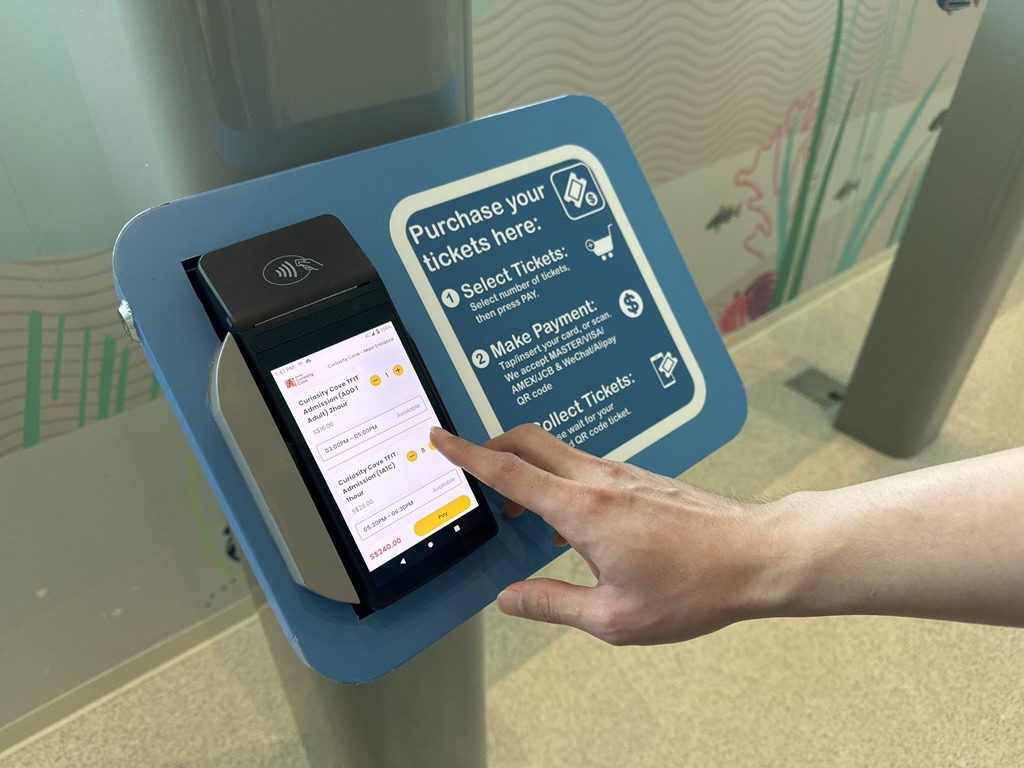
Mandai Wildlife Group encountered this problem while analysing ticket purchase abandonment. Like most digital teams, their analytics dashboards could identify where visitors were dropping out of the purchase funnel. What those dashboards could not reveal was why.
Instead of relying solely on retrospective analysis, the team introduced a simple intervention. When behavioural signals such as idle time on page, rage clicks, or repeated navigation loops suggested that a visitor was about to abandon the purchase journey, a short survey appeared asking one question: “Why are you leaving?”
The survey required no personal data and no long form completion. Behavioural signals already captured in the background were sufficient for segmentation.
The responses revealed something the team had underestimated. Guests were not abandoning their purchases because prices were too high or the checkout flow was broken. They were confused. Certain ticket bundles did not clearly communicate their value proposition.
The solution was straightforward: clarify the offer. Once messaging was simplified, conversion improved.
The most valuable analytics insight Mandai Wildlife Group generated that year did not come from a dashboard. It came from asking guests a single question at the exact moment friction occurred. That moment also exposed a deeper requirement, the ability to understand guest behaviour across channels in near real time.
Guest OS Is a Strategy, Not a Software Purchase
The concept of a Guest OS is increasingly appearing in travel and hospitality boardrooms. However, it is often misunderstood.
Many executives interpret Guest OS as a technology platform — a customer data platform, personalisation engine, or orchestration suite that promises to unify the guest journey. According to Srihari, this interpretation misses the point. “Guest OS is a philosophy that brings together technology, process, and strategy grounded on data with guest experience as the north star.”
A philosophy cannot be purchased. It has to be built through leadership alignment, process redesign, and a different way of defining success.
The real KPIs of a functioning Guest OS are not system metrics like click-through rates or campaign reach. They are business outcomes: higher ARPU because guests perceive genuine value, repeat visits because the experience justifies returning, and lifetime value growth driven by sustained trust.
Technology enables these outcomes. Philosophy determines whether they occur.

Credit - Mandai Wildlife Group
Are You Building Your Guest Personalisation Strategy Around Technology or Guests?
There is a simple question that reveals whether a travel brand’s technology strategy is genuinely guest-led: Did you identify the guest pain point before or after choosing the platform?
The wrong sequence, which remains common across the industry, begins with technology. A platform is selected first sometimes as part of a commercial partnership and guest experience problems are later assembled to justify the investment. The outcome is predictable: an expensive solution that solves fewer problems than expected.
The alternative approach reverses the sequence. The guest journey is mapped first, covering pre-visit discovery, booking decisions, onsite navigation, and post-visit engagement. Only once friction points are clearly understood does the organisation ask a second question: what is the minimum viable technology required to solve these problems effectively?
Most organisations already know which path they have taken. The challenge lies in deciding whether they are prepared to change it.
Where to Build Your Guest Data Architecture
Ask where guest data lives inside most travel companies and the answer is usually the CRM. Ask who owns it and the conversation becomes more complicated.
Marketing teams often believe the data belongs in the marketing stack, while operations teams assume it belongs in operational systems. Both perspectives produce the same outcome: guest intelligence becomes fragmented across departments.
The data team at Mandai Wildlife Group advocates a different architecture. Guest data should sit inside a neutral intelligence layer, a central environment that belongs to neither marketing nor operations but serves both.
This layer aggregates signals from across the organisation, including website and mobile behaviour, ticket purchases, membership activity, onsite interactions, location signals, and post-visit feedback. When responsibly unified, these signals allow organisations to move beyond broad segmentation toward hyper-segmented guest insights, enabling far more precise experience design.
Every new interaction updates the unified guest profile, improving the organisation’s understanding of each visitor over time.
The goal is not surveillance. It is context. Instead of repeatedly treating guests like strangers, the organisation begins to recognise returning visitors and respond accordingly.
Privacy-Safe Data Collaboration: The Next Competitive Edge in Travel
Today, most travel brands competing on personalisation are focused on improving their Single Customer View, martech stack, and data science capabilities. That competition will likely be decided within the next few years.
The next frontier is already emerging: privacy-first data collaboration.
Travel experiences rarely involve a single organisation. A guest journey may include an airline, a hotel, an attraction, ground transport, and several digital intermediaries. Yet most brands still understand only the narrow segment of the journey that occurs within their own systems.
Data cleanrooms offer a way to change this. These environments allow organisations to analyse shared audience insights without exchanging personally identifiable information. Airlines can identify which hotel segments their most valuable passengers prefer, attractions can detect travel intent earlier in the planning phase, and destination ecosystems can coordinate campaigns around shared visitor behaviour.
For organisations already operating on cloud-based data infrastructure, the technical barrier to exploring cleanroom environments is relatively low. The strategic implications, however, are significant. Brands that begin experimenting with these capabilities now will shape the next generation of travel intelligence.

Credit - Mandai Wildlife Group
The Mandai Playbook: Six Moves to Build a Real Guest OS
Mandai Wildlife Group’s experience offers several practical lessons for travel leaders building modern guest intelligence capabilities.
1. Diagnose before you buy
Map the full guest journey and identify friction points before selecting technology.
2. Build the neutral layer first
Guest data should sit in a central intelligence layer that informs marketing and operations equally.
3. Suppress before you send
Any message promoting something a guest has already purchased signals a broken data architecture.
4. Avoid acting on siloed insights.
Campaign performance data can be misleading when viewed in isolation. Teams should evaluate trends against broader indicators such as overall digital conversions, seasonality, and natural demand growth before making investment decisions.
5. Use behavioural signals, not just surveys
Rage clicks, idle time, and dead-end navigation patterns reveal friction in real time.
6. Establish AI transparency rules
In channels where guests expect human interaction such as contact centres, live chat, or email support, organisations should clearly disclose when automation is involved, allow guests the option to speak with a person, and ensure any data collected is non-sensitive and transparently explained.
7. Start exploring cleanroom partnerships now
Privacy-safe data collaboration will become a major competitive differentiator across travel ecosystems by 2027.
The Longer You Wait, the Harder It Gets
For years, the travel industry has tried to buy its way toward better guest experience. Technology investments have been substantial, but the results have been uneven.
The organisations beginning to pull ahead share a different starting point. They begin with the guest journey rather than the software catalogue. They design data architecture that serves the entire organisation rather than individual departments. And they measure success in guest outcomes rather than platform capabilities.
That shift is what defines a genuine Guest OS.
The concept is simple. The execution is not. And every year a travel brand operates without it, the harder the competitive gap becomes to close.