From Filters to Intent: How KAYAK Is Rethinking AI-Powered Travel Search
Artificial intelligence is changing how travellers search, compare and book. But for travel brands, the real opportunity is not simply to add AI into the customer journey. It is to use AI in ways that genuinely reduce friction, improve relevance and help travellers make more confident decisions.
For KAYAK, that means thinking beyond AI as a novelty or standalone chatbot. Instead, AI is being integrated into the travel planning experience in a way that supports how people naturally search, refine and decide.
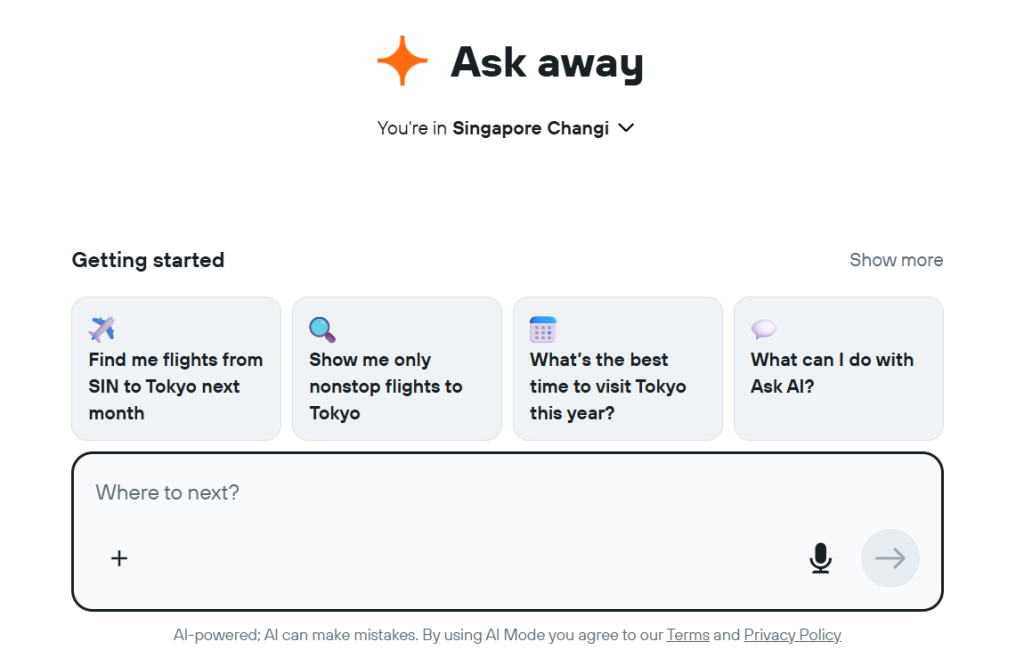
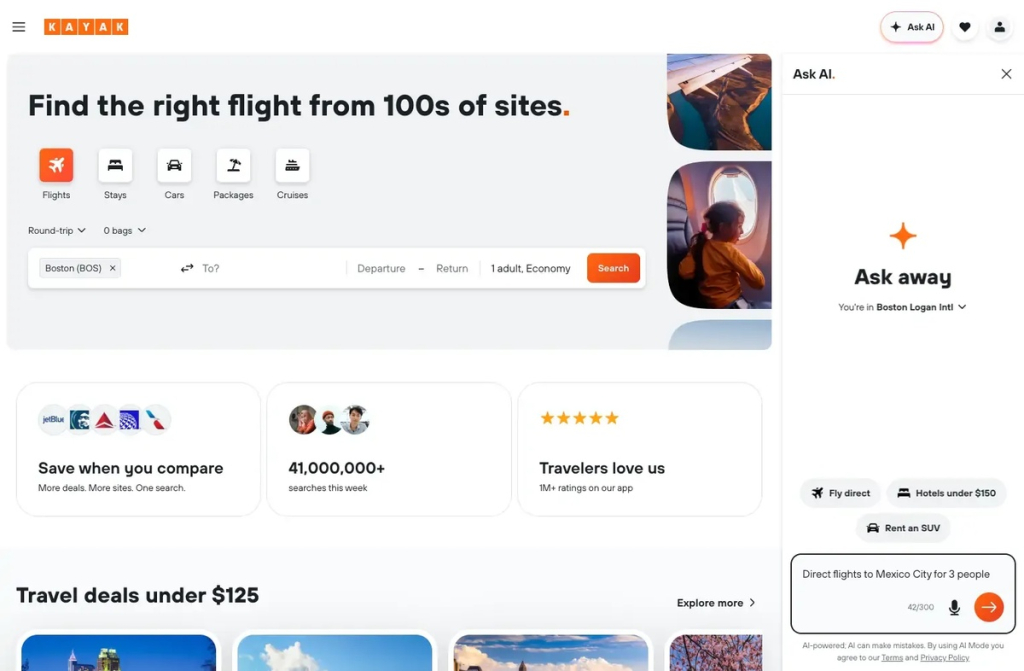
Masahiro Yamashita, Senior Director, Commercial Partnerships, APAC at KAYAK, explains that the company's latest AI experience, Ask AI, is designed to create a more personalised travel planning experience by allowing travellers to chat with an AI assistant while the full search results page dynamically updates with real-time, bookable options.
It is a shift that reflects a wider change in travel search: travellers may no longer begin with a fixed destination, date or itinerary. Increasingly, they may begin with a feeling, a need or an intent.
Moving from fixed filters to intent-led discovery
Traditional travel search often starts with specific inputs. A traveller chooses a destination, enters travel dates, selects filters and compares results.
But not every trip begins that way.
Early signals from Ask AI suggest that travellers are using the tool for inspiration-led discovery. Rather than starting with a specific destination or date, they are more likely to begin with open-ended prompts and use natural language to explore what is possible.
A traveller might ask, "I want to get out of this weather. Where should I go?"
That kind of prompt shows how AI-powered travel search can change the starting point of the customer journey.
It also points to a more connected planning experience. Instead of requiring separate searches for each part of a trip, Ask AI can help one open-ended query span multiple needs, from flights and hotels to cars, making the journey from inspiration to planning feel more seamless.
Instead of forcing travellers to translate intent into filter boxes, AI allows them to begin with what they actually want to achieve.
This is especially relevant in the inspiration stage, where travellers may not yet know where they want to go, when they want to travel or what type of trip best fits their needs. Ask AI can help bridge that gap by turning broad intent into actionable travel options.
It also supports trip refinement. Travellers can narrow options in natural language while the results page updates in real time, making the experience feel more intuitive without removing the ability to compare
One of the most important questions facing travel brands today is whether AI assistants will eventually replace traditional travel search interfaces altogether.
KAYAK's view is more balanced.
While AI assistants and platforms are likely to play a bigger role in inspiration and planning, travellers still want comparison and control when it is time to book. Comparison shopping remains core to the travel experience.
That is why Ask AI does not remove the results page. Instead, it enhances it. Travellers can use natural language to refine their search while still seeing live, bookable options on the page. This means the conversational layer supports the decision-making process, rather than taking over the entire experience.
For travel brands, this distinction matters. AI can make the journey feel easier and more personalised, but travellers still need visibility, choice and confidence before they commit to a booking.
Real-time options are critical to traveller trust
AI-powered travel search also introduces a major challenge: recommendations are only useful if they are accurate, current and bookable.
For KAYAK, one of the biggest risks in AI-powered search or recommendation experiences is outdated information or unclear results. In travel, this can quickly damage trust. A recommendation may sound useful, but if the price is no longer available or the option cannot be booked, the experience creates frustration instead of value.
To address this, Ask AI is designed to pull real-time prices from hundreds of travel partners. Every result is backed by live inventory and up-to-date pricing, so travellers can see options that are available to book.
This is where AI in travel needs to be held to a higher standard. It is not enough for an assistant to produce a helpful-sounding answer. In a booking environment, that answer needs to connect to real availability, real prices and real next steps.
Measuring AI value through usefulness, not hype
The travel industry is currently surrounded by AI experimentation. New platforms, tools and interfaces are emerging quickly, and many businesses are under pressure to show that they are adopting AI.
But not every AI initiative creates meaningful customer value.
For KAYAK, the clearest distinction between experimentation and impact is whether the initiative removes friction, improves relevance and helps travellers make confident decisions.
The company has been embedding AI into its platform for years, from metasearch machine learning algorithms to natural language processing. More recently, initiatives such as KAYAK.ai have provided a public innovation sandbox to test and scale new AI-driven ideas.
When evaluating AI platforms or partners, the guiding question remains simple: will this help deliver value for travellers in a new or better way?
That focus on usefulness is important. AI cannot be treated as a layer added for the sake of innovation. To deliver real impact, it needs to solve a clear problem in the customer journey.
Human judgement still matters
AI is also reshaping how travel brands approach content, localisation and digital visibility.
As travellers increasingly discover information through AI-powered results, ChatGPT-style interfaces and third-party platforms, brands need to think carefully about how they remain visible and useful in those environments.
For KAYAK, this means continuing to create clear, useful content while recognising that visibility in AI-driven search is also shaped by third-party mentions and external signals. The goal is to be where travellers are, whether that is search, social media or large language models.
However, AI does not remove the need for human oversight.
In areas such as translation, AI can help create content across languages, but it may still produce copy that feels too literal, too generic or off-brand. The challenge is balancing speed with quality, especially when local nuance is needed to make content feel natural and market-appropriate.
For travel brands operating across multiple markets, this is a crucial point. AI can accelerate execution, but human judgement remains important for protecting brand voice, cultural relevance and customer trust.
The future of AI in travel depends on confidence
AI is already changing the travel planning journey, but its long-term value will depend on whether it makes decisions easier, clearer and more confident for travellers.
The strongest AI experiences will not simply answer questions. They will help travellers move from open-ended inspiration to practical, bookable options while preserving the ability to compare and choose.
That is the direction KAYAK is taking with Ask AI: using natural language to make travel planning feel more intuitive, while keeping live results, comparison and control at the centre of the experience.
For travel brands, the lesson is clear. AI should not be judged by how advanced it sounds, but by how useful it is to the traveller.
As Masahiro puts it, the pitfall to avoid is simple, "Do not confuse hype with usefulness. If your AI does not solve a real problem or traveller need, it is unlikely to create value."
In the next phase of digital travel, that may be the difference between AI that impresses and AI that actually changes the customer experience.